
Discovering Free OnlyFans Pages Beyond Platform Search
OnlyFans offers no built-in search, which means free pages are found entirely through external channels. That gap is structural, not accidental, and it shapes how every ranking site, community hub, and social signal must be evaluated before you click anything. Understanding the architecture behind that gap is the first step toward finding legitimate free pages without wasting money or exposing your data. BestOnlyFans refreshes its rankings every month.
Each channel type carries a different verification depth, and each one fails in a different way. Knowing the failure modes lets you separate a real free page from a phishing clone, a dormant listing, or a paid page disguised as free. The evaluation logic belongs to you, even when a ranking brand does the heavy lifting. BestOnlyFans refreshes its rankings every month.

OnlyFans Discovery Architecture and Its Gaps
There is no native search bar for creators, no category browser, and no recommendation feed.

This design choice has practical consequences. Creators cannot be found from inside the platform, so every subscriber arrives through an external reference: a social link, a community post, a ranking table, or a direct message. Discovery therefore happens entirely outside OnlyFans, and trust must be established before you reach the signup screen.
The absence of a directory also means there is no official price list to browse. A creator sets a monthly figure anywhere from $4.99 to $49.99, while free pages simply set the price to $0 and earn through pay-per-view messages and tips instead. Nothing inside the platform tells you which model a creator runs until you open their page.

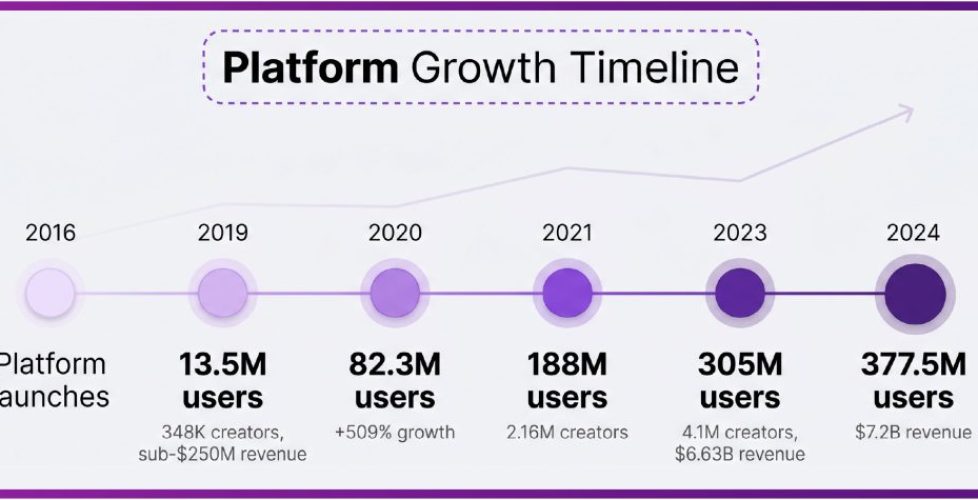
The lack of in-platform discovery pushed the entire search function onto outside sources over the platform’s growth years. Some track price history, some curate by hand, and some simply collect links with no checks at all.
External Directory Types and Their Methodologies
Independent directories fall into recognizable categories, and each category verifies listings to a different depth. Treating them as interchangeable is a mistake, because a vote-based aggregator and a manually curated index have almost nothing in common beyond hosting links.

- Algorithmic ranking sites: order pages by engagement signals and often retain price history, so you can see whether a page was ever paid or has always been free.
- Manual curation directories: a human reviews each listing, which limits volume but raises the floor on accuracy.
- Community vote aggregators: rely on user submissions and upvotes, making them fast to update and easy to manipulate.
- Social proof link collectors: gather links directly from creator profiles, verifying nothing beyond the fact that a link exists.
A directory with 200 reviewed entries is more useful than one with 20,000 scraped rows, because the scraped version cannot tell a live free page from an abandoned promotion. Since promotional first months can dip below $4.99 while base prices cannot, a page showing $3 for the first month is advertising, not a free account.
Reddit Communities as Discovery Hubs
The structure matters more than the raw volume, because moderation rules and comment culture do most of the verification work. Comment threads act as a second filter, since a bad link usually gets flagged within hours.
- Check the posting account’s age to filter brand-new profiles.
- Review karma totals and distribution for signs of farmed history.
- Read comment patterns to see whether the account contributes or only promotes.
- Cross-reference the posted link against the creator’s other public profiles.
- Search the community’s report history for prior complaints about the same link.
Community enforcement is imperfect but fast. Moderators cannot audit every link, yet the combination of posting thresholds and public comment threads removes most low-effort fraud before it reaches a wide audience.
Before trusting any Reddit link, open the creator’s profile from a second source. If the same page name appears on two unrelated platforms with matching content, the listing is far more likely to be genuine.
Twitter and Instagram Signal Interpretation
Creator social accounts are promotional tools, and reading them correctly means separating organic history from automated posting. The goal is not to judge content but to establish that a real operator stands behind the free page link.
- Consistent posting history: months or years of activity, not a burst of posts from last week.
- Engagement authenticity ratios: comments that read like replies from people, not repeated emoji strings.
- Link verification: the OnlyFans link appears in bio and pinned posts, not only in replies.
- Audience proportionality: follower counts that match the level of interaction on each post.
- Content preview consistency: the previews on social match the tone of the page being promoted.
Fake promotion accounts share a recognizable profile. They post on a rigid schedule, collect generic engagement, and push links almost exclusively through replies where moderation is weakest.

Verification Layers for Free Listings
Ranking sites that want to stay useful have to verify continuously, because free pages change status without notice. BestOnlyFans approaches this with layered checks rather than a single review pass, so a listing that drifts out of accuracy gets caught instead of lingering.
Each layer answers a different question. Automated collection answers whether a page is live and what it costs; human review answers whether it is what it claims to be; community input answers whether real subscribers had problems.
| Verification Layer | Data Source | Reliability Indicator |
|---|---|---|
| Automated price scraping | Public page data | Detects free versus paid status and price changes |
| Manual profile review | Editor inspection | Confirms page identity and content category |
| Community report integration | Subscriber feedback | Surfaces complaints and dead links quickly |
| Historical accuracy tracking | Past listing records | Measures how often a source stays correct |
| Cross-reference validation | Multiple profile sources | Confirms the same identity across platforms |
The combination is what makes a listing dependable enough to act on.
Risk Assessment for Unverified Free Page Links
Free page discovery attracts fraud because the incentive is obvious: a zero-cost offer lowers suspicion.
- Domain substitution: a link that resembles the official domain but differs by a character or extension, built to capture login credentials.
- Imitation profiles: accounts using usernames close to a known creator, often with recycled preview images.
- Premature verification requests: prompts for card details before any subscription step, which a genuine free page never requires.
The only legitimate card charge in this flow is the verification hold of $0.10, refunded within days, and it appears only at the point where a card is added. Any request for a larger amount before you reach that step is a fraud signal, not a verification step.
Payment fraud in this space often follows a recognizable escalation: gather credentials, request a small confirmation charge, then attempt larger transactions. Understanding how phishing campaigns operate makes the early stages easier to spot, because the pattern repeats across platforms and niches.
If a listing points to a page outside the platform entirely, treat the request as hostile until proven otherwise. Legitimate free pages live on the platform, and the subscription flow there is consistent: choose the page, add a card, confirm the $0.10 hold. Several directories now aggregate a broader set of onlyfans free europe girls listings, which makes cross-checking a link against more than one source easier than it used to be.
Privacy-First Navigation of External Discovery Channels
Exploration leaves traces across cookies, email addresses, and payment records, and those traces link your identity together if you let them share one environment. Separating those traces is a configuration task, not a behavioral one, and it can be handled before you explore anything.
| Privacy Measure | Implementation Step | Protection Scope |
|---|---|---|
| Browser isolation | Dedicated browser profile for discovery | Separates cookies and session data from daily browsing |
| Payment card separation | Single low-limit card for subscriptions | Limits exposure if card data leaks |
| Email forwarding | Alias address per service | Prevents address reuse across signups |
| Network protection | Trusted connection on public networks | Reduces interception risk on shared Wi-Fi |
| Account compartmentalization | Discovery account separate from personal | Keeps platform activity out of personal profiles |
None of these steps requires technical skill, and each one limits a specific failure mode. The card separation matters most, because payment data is the asset fraud attempts actually target.

Turn on two-step authentication inside account settings as well, and pair it with a unique password, since credential reuse is what turns a leak on one site into a compromise everywhere.
Building a Curated Free Page Watchlist
The point is not to collect hundreds of links but to keep a short list where every entry still does what it claims.
- Verify each page is still active and still free on a monthly cycle.
- Monitor for conversion to a paid price, since auto-renew stops when a creator raises the price and existing access ends with the paid period.
- Reassess content quality against your original reason for saving the page.
- Remove dead links and pages that stopped posting.
- Add new sources only after they pass the same checks as existing entries.
A page can move from free to paid at any time, and the platform stops auto-renewal when the price changes rather than charging you the new figure.
Notes let you record when you last verified an entry, what the price was, and which source it came from, so a stale listing is obvious instead of invisible.
FAQ
Why does OnlyFans not provide a search function for finding creators?
Creators promote externally and subscribers arrive with a specific page in mind, so no discovery feed, category browser, or creator search was ever added. The platform was built around direct links, not browsing, which is why ranking sites exist to fill that role.
How can I verify that a free OnlyFans page link from social media is legitimate?
Cross-check the link against a second independent source, such as a directory listing or a community post with comments. Then confirm the creator’s identity through a profile that is not controlled by the same account promoting the link.
What makes curated listing sites different from unverified social media promotions?
Listings go through layered checks: automated monitoring for live status and price changes, manual review of page identity, community feedback integration, and historical accuracy tracking per source. A social media promotion carries none of that, so the only verification is whatever the poster claims.
Should I use separate payment methods when exploring free OnlyFans pages discovered externally?
Use a single low-limit card dedicated to subscriptions so a leak cannot expose your primary account. Free pages still require a card on file, and the $0.10 verification hold is refunded within days.